Tracing the History of Boat Transportation on the Kiso River (Middle Reaches)
About Course
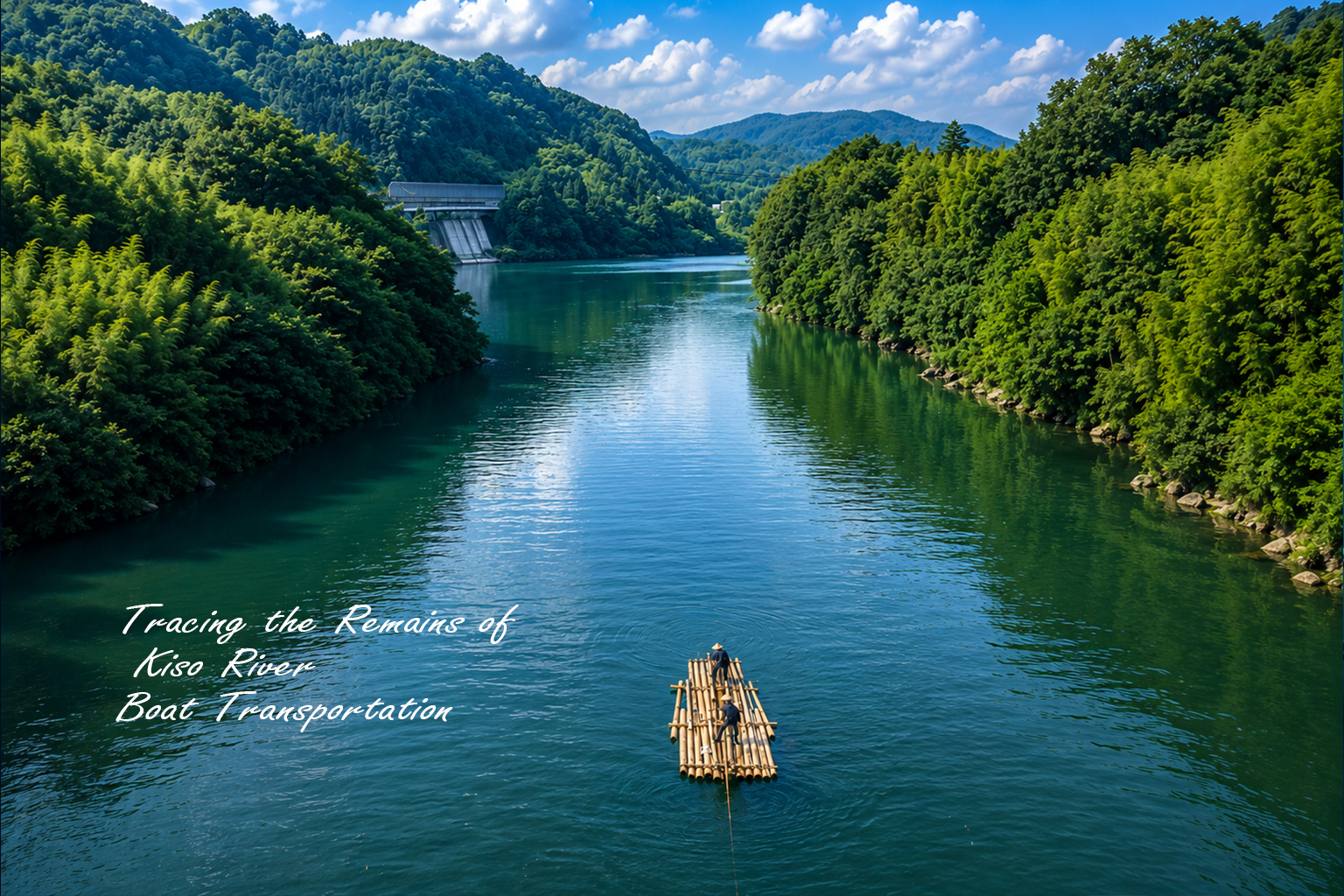
Timber from the Kiso region was used to build historic structures such as Osaka Castle and Fushimi Castle. Trees grown in the mountains of Kiso were transported downstream by river, supplying towns in Owari and Mino and other areas beyond. It is also said that sacred trees used in the Ise Grand Shrine’s Shikinen Sengu, the ritual rebuilding of the shrine every 20 years, were assembled into rafts at the Nishikori timber rafting site in Yaotsu and sent down the Kiso River.
River transport developed to carry timber and other goods, but the river served a much greater purpose than simply moving cargo. Ports and ferry crossings were established along its banks, connecting people, goods, and information. Trade flourished, and each community developed its own distinctive culture. The Kiso River was a vital route linking forest resources with people’s daily lives and supporting the growth of the region.
Over time, the role of the Kiso River began to change. In the modern era, its water was harnessed to generate hydroelectric power, while its beautiful gorge scenery attracted visitors. In 1924, during the Taisho era, sightseeing boat services between Oowaki Port in Dota, Kani City, and Inuyama began operating on a larger scale. The river gradually became known not only as a route for transporting goods, but also as a place to enjoy the beauty of nature.
On this journey, we follow the Kiso River from Inuyama, exploring the gorges, cliffs, unusual rock formations, and traces of old ferry crossings shaped by the river. We also discover the history of river transport and the roads that once connected communities. In Yaotsu, we visit Nishikori, once an important timber rafting site, and Kurose Port, while learning about local festivals and the region’s brewing traditions.
Timber grown in the mountains traveled downstream, supporting people’s livelihoods and industries while helping towns grow and local cultures flourish. By exploring these historic places, we trace the story of the Kiso River basin and discover how nature and human life have shaped one another over time.
Course Content
Kiso Timber Used in Historic Landmarks such as Osaka Castle, Ise Grand Shrine, and Nagoya Castle — and the River That Carried People and Culture
-
Tracing the History of River Transport on the Kiso River
-
From a River of Timber Transport to a River of Tourism
-
Walk the Romantic Road and Discover How the River Has Shaped Nature and Human Life
-
Discover the History of the River and the Region at Minokamo City Museum
-
Reflecting on River Use and Changing Times at Kaneyama Dam
-
Savor Local Cuisine and Experience the Bounty of the Land
-
From Nishikori Timber Rafting Site to Sosuikyo Gorge: Tracing the Legacy of the River That Carried Kiso Timber
-
Discovering Festival Traditions Passed Down Through Wood and People at the Kurose-gumi Danjiri Storehouse
-
Discovering Local Water and Brewing Traditions at Kuramoto Yamada
-
From Yaotsu to Inuyama: Reflecting on the Stories of the Kiso River Basin
Student Ratings & Reviews